What Are Vertical Solar Systems?
Lumiton Solar's Vertical solar systems use photovoltaic modules mounted in an upright structure.
Lumiton Solar
7/22/20264 min read
With integrated options for batteries, connectivity, and smart grid.
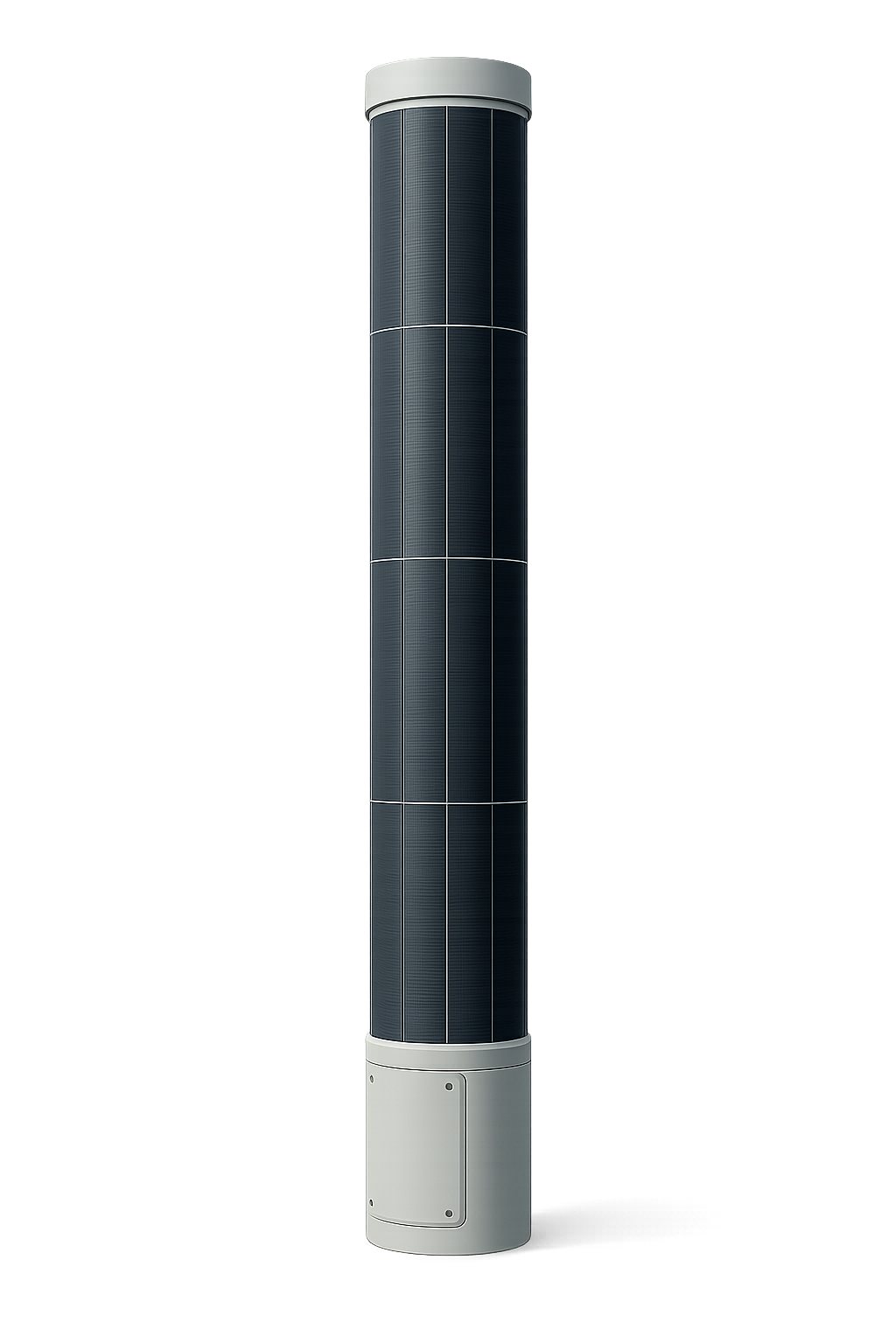


Sol-Pole: Sustainable Solar System Designed to Last Long
"Small parts need to be replaced (upgraded), not entire system. Broken parts can be recycled." Lumiton Solar
Fast Installation
Low Maintenance
A modular compact system that can be up-cycled not be replaced.
Up-Cyclable




The exact configuration depends on the project: a solar tower, a solar fence, a vertical bifacial panel row, a compact residential unit, or a utility-scale structure designed for distributed generation. In many cases, vertical solar can be combined with battery storage, smart monitoring, and connectivity equipment to create a more complete energy system.
The most important difference is geometry. Conventional panels are often tilted to face the strongest midday sun. Vertical solar can be designed to capture light at different times of day, use reflected light from the ground or nearby surfaces, and occupy less horizontal space. Bifacial modules are especially relevant because they can collect light from both sides when the rear side is exposed to reflected and diffuse light.
What Are Vertical Solar Systems?
Vertical solar systems are photovoltaic systems designed to generate electricity from upright or near-upright structures instead of relying only on broad horizontal roof or ground space. They can appear as solar towers, solar fences, vertical panel rows, roadside structures, building-adjacent systems or modular energy points for remote locations.
For Lumiton Solar, vertical solar is not only a change in panel angle. It is a design approach for places where clean energy is needed but conventional solar layouts are difficult, limited or too slow to deploy. Many sites have sunlight, but they do not have enough flat roof area, available land or infrastructure for a standard solar array. Vertical systems help open those spaces to solar power.
How vertical solar systems work
A vertical solar system uses photovoltaic modules mounted in an upright structure. The exact design depends on the project: a solar tower, a solar fence, a vertical bifacial panel row, a compact residential unit or a utility-scale structure designed for distributed generation. In many cases, the system can be combined with battery storage, monitoring, communication equipment or local power electronics.
The most important difference is geometry. Conventional panels are often tilted to face the strongest midday sun. Vertical systems can collect light at different times of day, use reflected light from the ground or nearby surfaces, and occupy less horizontal space. Bifacial modules are especially relevant because they can collect light from both sides when the rear side is exposed to reflection and diffuse light.
Why vertical solar is different from rooftop solar
Rooftop solar is often the first option for homes and commercial buildings. It can be very effective when the roof is strong, unshaded, correctly oriented and large enough. But rooftop solar is not available to every site. Some buildings have weak roof structures, poor orientation, heavy shading, rented ownership, heritage restrictions or complex installation conditions.
Vertical solar offers another path. It can be placed near a building, along a boundary, beside infrastructure or in compact spaces where roof work is not practical. This does not replace rooftop solar in every situation. Instead, it gives project owners another design option when standard rooftop solar is limited.
Where vertical solar systems can be used
Vertical solar can support many environments where space, access and installation speed matter. Residential properties can use compact vertical structures where roofs are unsuitable. Commercial facilities can use vertical systems near parking zones, perimeter areas or service corridors. Farms and agrivoltaic sites can use vertical rows that leave more ground open for movement, crops or maintenance access.
Remote communities can also benefit. In areas where grid extension is expensive or unreliable, a modular vertical solar system with battery storage can provide local electricity for lighting, communications, refrigeration, water pumping, security or community services. For infrastructure owners, vertical solar can be placed along roads, fences, boundaries, transport corridors or unused strips of land.
Key benefits at a glance
Space-conscious design: uses vertical area and compact footprints.
Flexible deployment: suitable for homes, facilities, roads, farms and remote locations.
Dual-use potential: can combine energy generation with fencing, barriers or site boundaries.
Storage-ready architecture: can be paired with batteries and monitoring.
Future-focused sustainability: encourages modular, repairable and scalable solar infrastructure.
Why the vertical approach matters now
Solar PV is expanding quickly worldwide, but growth creates new challenges: land competition, grid connection delays, difficult rooftops, remote electrification needs and lifecycle responsibility. The International Energy Agency reports that solar PV is a central driver of renewable electricity growth. At the same time, millions of people still lack electricity access, and end-of-life planning for PV equipment is becoming more important as the solar industry matures.
Vertical solar systems respond to these challenges by making solar more adaptable. Instead of assuming that every project needs a large roof or open field, vertical design asks a different question: where can clean power be placed with the least disruption and the greatest practical benefit?
How Lumiton Solar approaches vertical solar
Lumiton Solar focuses on Swiss-designed vertical solar concepts that combine clean energy generation with practical deployment. The aim is to make solar useful in more locations: homes with limited roof options, remote communities, utility sites, compact infrastructure corridors and places where conventional solar would require too much land or too much preparation.
Each project should still begin with a site assessment. Solar exposure, shading, wind conditions, structural anchoring, energy demand, storage needs, local rules and maintenance access all matter. A vertical solar system is not a universal replacement for all PV systems, but it can be the right solution when space, visibility, speed and modularity are central concerns.